Chapter 1: Introduction
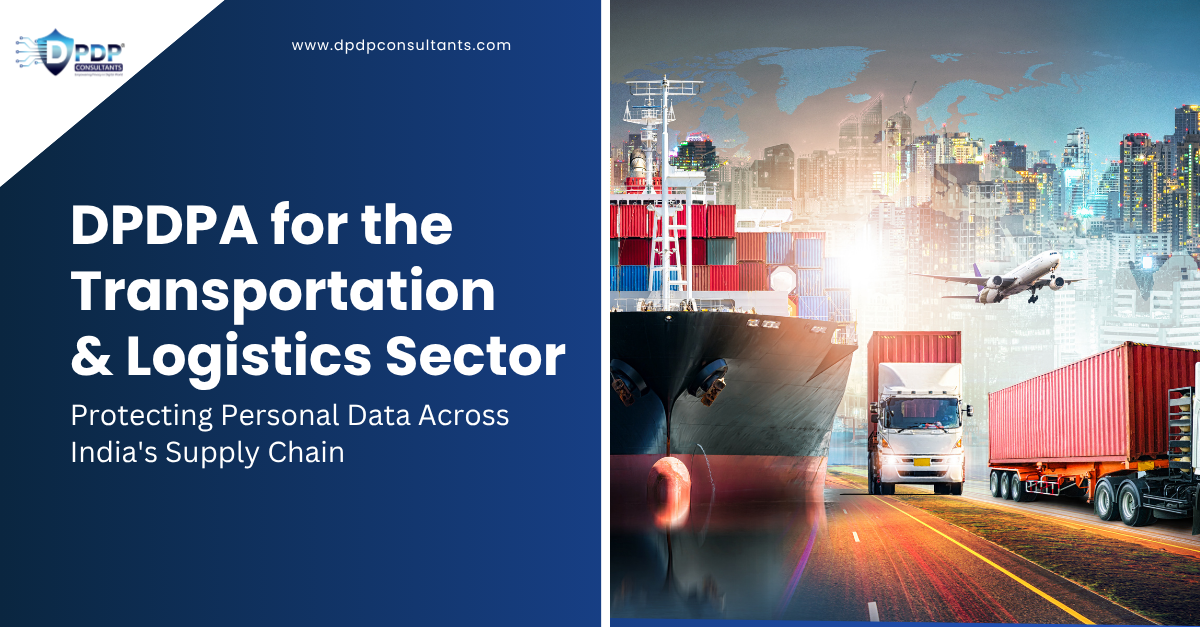
India's transportation and logistics sector is
the backbone of the world's fifth-largest economy, contributing approximately
14% to GDP and employing over 22 million people directly. The sector
encompasses road freight, railways, aviation, shipping, warehousing, express
delivery, and the rapidly expanding e-commerce logistics ecosystem. In the last
decade, digital transformation has fundamentally reshaped how goods and people
move across the country. GPS-enabled fleet tracking, real-time shipment visibility
platforms, ride-hailing applications, digital freight exchanges, e-waybill
systems, FASTag-based toll collection, and last-mile delivery apps have created
a massive and interconnected data infrastructure.
This digital infrastructure generates enormous
volumes of personal data. Every truck on a highway transmits its driver's GPS
location in real time. Every passenger booking an airline ticket or a cab ride
shares their name, phone number, email, payment details, and travel patterns.
Every warehouse worker's biometric attendance is recorded. Every parcel
delivered to a consumer's doorstep involves the collection of addresses, phone
numbers, OTPs, and sometimes even photographs and digital signatures. The sector
has become one of the most data-intensive industries in India, yet data
protection awareness and readiness remain significantly low.
The Digital Personal Data Protection Act, 2023
(DPDPA), India's first comprehensive data protection legislation, applies
squarely to the transportation and logistics sector. Every logistics company,
freight aggregator, shipping line, airline, ride-hailing platform, and express
delivery service that collects and processes personal data of individuals in
India is now a Data Fiduciary under the law. With the DPDP Rules, 2025,
providing operational detail and the compliance deadline set for May 2027, the
sector faces a significant challenge: building data protection frameworks
across complex, multi-party supply chains where personal data flows through
dozens of entities, systems, and geographies.
This white paper provides a comprehensive guide
for transportation and logistics industry leaders, compliance officers, and
technology teams. It examines how the DPDPA applies to every segment of the
sector, maps the critical data touchpoints, identifies unique vulnerabilities,
and outlines a practical compliance roadmap built around advisory services and
automation tools.
Chapter 2: What Is the DPDPA and How Does It Apply to Transportation and Logistics?
Chapter 3: Why Transportation and Logistics Is Uniquely Vulnerable
The Digital Personal Data Protection Act, 2023,
received Presidential assent on August 11, 2023, and establishes India's
definitive legal framework for governing digital personal data. The Act creates
a rights-based system where individuals (Data Principals) have clear rights
over their personal data, and organizations processing that data (Data
Fiduciaries) bear corresponding obligations. For the transportation and
logistics sector, understanding how these definitions map to industry
operations is the essential first step.
Key Definitions in the Transport
Context
A Data Principal is any individual whose
personal data is collected or processed. In the transportation and logistics
context, Data Principals include passengers on airlines, railways, and
ride-hailing platforms; consignees and consignors in freight operations; truck
drivers, delivery agents, and warehouse workers; employees of logistics
companies; and individuals whose data appears in shipping manifests, customs
declarations, or delivery records. A Data Fiduciary is the entity that
determines the purpose and means of processing personal data. Airlines,
shipping companies, logistics aggregators, ride-hailing platforms, express
delivery companies, fleet management firms, and warehouse operators all qualify
as Data Fiduciaries. A Data Processor is an entity that processes data on
behalf of a Data Fiduciary. In logistics, this includes GPS tracking service
providers, cloud platform vendors, third-party delivery partners, IT service
providers managing booking systems, and outsourced customer support operations.
The concept of a Significant Data Fiduciary
(SDF) is particularly relevant to large logistics and transport operators. The
Central Government may designate a Data Fiduciary as an SDF based on the volume
and sensitivity of personal data processed, the risk to Data Principals, and
the potential impact on sovereignty and public order. Large ride-hailing
platforms processing data of hundreds of millions of users, national logistics
aggregators, major airlines, and Indian Railways are strong candidates for SDF
designation. SDFs face enhanced obligations including mandatory Data Protection
Impact Assessments, the appointment of a Data Protection Officer based in
India, and periodic independent audits.
Application Across Transport
Segments
The DPDPA applies to all transportation and
logistics entities that process digital personal data within India or process
data outside India in connection with offering goods or services to individuals
in India. This covers the full spectrum of the sector. Road freight companies
process driver data, GPS tracking data, and consignee information for millions
of shipments. Airlines process passenger name records (PNRs), passport details,
payment data, and travel preferences. Railways process booking data, Aadhaar-linked
ticket information, and employee records for one of the world's largest
workforces. Ride-hailing platforms process real-time location data, trip
histories, payment details, and driver background verification records. Express
delivery and e-commerce logistics companies process recipient addresses, phone
numbers, delivery OTPs, electronic proof of delivery including photographs and
signatures, and return shipment data. Shipping and port operators process crew
manifests, customs documentation, and vehicle entry records.
The DPDP Rules, 2025, published in draft form
and expected to be finalized, provide additional clarity on consent mechanisms,
data retention periods, breach notification procedures, and cross-border data
transfer norms. The compliance deadline of May 2027 applies to all entities.
Transportation and logistics companies must use the intervening period to build
their compliance frameworks, upgrade their technology systems, and train their
workforce across all operational tiers.
Chapter 3: Why Transportation and Logistics Is Uniquely Vulnerable
The transportation and logistics sector faces a
distinctive combination of data protection challenges that make it one of the
most complex industries to bring into DPDPA compliance. The sector's
operational model, built on multi-party supply chains, real-time data sharing,
a massive gig workforce, and cross-border data flows, creates vulnerabilities
that demand specialized attention.
Real-Time Location Tracking at
Scale
Perhaps no other industry tracks the real-time
physical location of as many individuals as transportation and logistics. Fleet
management systems continuously monitor the GPS coordinates of hundreds of
thousands of trucks, delivery vehicles, and two-wheelers across India.
Ride-hailing platforms track the live location of both drivers and passengers
during every trip. Airlines and railways track passenger movements through
check-in, boarding, and arrival data. This location data, when linked to an
individual's identity, constitutes personal data under the DPDPA and reveals
highly sensitive information: where a person lives, works, travels, and spends
their time. A breach of location data can expose individuals to physical safety
risks, stalking, and surveillance.

Multi-Party Data Sharing
A single shipment in India's logistics chain may
involve a shipper, a freight broker, a transport company, a driver, a hub
operator, a last-mile delivery partner, and a final recipient. Personal data,
including names, addresses, phone numbers, and shipment contents, flows across
all these parties, often through informal channels such as WhatsApp messages,
phone calls, and paper waybills. Under the DPDPA, the original Data Fiduciary
remains responsible for the actions of all downstream Data Processors. Managing
consent, purpose limitation, and data security across this fragmented chain is
a significant compliance challenge.
Massive Gig and Contractual
Workforce
India's logistics sector relies heavily on
contractual and gig workers. Ride-hailing platforms employ millions of
driver-partners. Express delivery companies engage hundreds of thousands of
delivery agents on contract or gig arrangements. Truck drivers are frequently
independent operators or employed through small fleet owners. The personal data
of these workers, including Aadhaar numbers, driving licenses, bank account
details for payments, biometric attendance records, background verification
data, and real-time GPS tracking, falls squarely within the DPDPA's scope. The
challenge is compounded by high workforce turnover, with some delivery
platforms experiencing annual attrition rates exceeding 100%.
Cross-Border Data Flows
International shipping, aviation, and
cross-border e-commerce logistics involve the transfer of personal data across
national boundaries. Passenger Name Records (PNRs) are shared between airlines
and government agencies across countries. Shipping manifests with crew details
flow between ports in multiple jurisdictions. Cross-border e-commerce platforms
transfer consignee data between Indian and international entities. The DPDPA's
cross-border data transfer provisions, which restrict transfers to countries not
blacklisted by the Central Government, add a layer of compliance complexity for
international logistics operators.
Legacy Systems and Informal
Processes
While large logistics platforms operate on
modern technology stacks, a significant portion of India's transport sector
still relies on legacy systems, paper-based processes, and informal data
sharing. Small fleet owners may maintain driver records in paper registers or
basic spreadsheets. Freight brokers may share consignment details via WhatsApp
or phone. These informal channels create data protection blind spots where
personal data is shared without consent, stored without security, and retained
indefinitely without any deletion policy.
CChapter 4: Data Touchpoints in the Transportation and Logistics Sector
The transportation and logistics sector's data
ecosystem is one of the most expansive and fragmented of any industry. Personal
data enters the system at dozens of points across the value chain, from the
moment a shipment is booked or a passenger hails a ride, through every transit
point, warehouse, and delivery stop, to the final proof of delivery or trip
completion. Mapping these data touchpoints is the essential first step in any
DPDPA compliance program.
The following diagram illustrates the major data
touchpoints across the transportation and logistics value chain. Each
touchpoint represents a system or process where personal data is collected,
processed, stored, or shared. Companies must inventory every one of these
touchpoints, classify the types of personal data involved, identify the Data
Principals affected, and assess the risk level associated with each data flow.

The table below provides a detailed breakdown of
twelve critical data touchpoints commonly found across transportation and
logistics companies. Touchpoints marked as High risk involve data that, if
breached, could cause significant harm to individuals, including physical
safety risks from location data exposure, identity theft from Aadhaar and
financial data leaks, or reputational damage. Medium risk touchpoints still
require robust protection but may involve less directly sensitive categories of
data.
|
Touchpoint
|
Personal Data Collected
|
Data Principals Affected
|
Risk Level
|
|
Fleet GPS / Telematics
|
Driver GPS location, speed, route history, driving
behavior, vehicle diagnostics
|
Drivers, operators
|
High
|
|
Passenger Booking Systems
|
Name, phone, email, ID proof, payment details, travel
history, seat preferences
|
Passengers, travelers
|
High
|
|
Driver / Crew Management
|
Aadhaar, driving license, bank details, background
verification, biometrics, health records
|
Drivers, crew, delivery agents
|
High
|
|
E-Waybill / GST Systems
|
Consignor/consignee name, GSTIN, address, phone,
shipment details
|
Shippers, receivers
|
Medium
|
|
Warehouse Management
|
Worker biometrics, access logs, shift data, inventory
handler records
|
Warehouse workers, supervisors
|
Medium
|
|
Last-Mile Delivery Apps
|
Recipient name, address, phone, OTP, delivery photos,
e-signatures, location data
|
Consumers, recipients
|
High
|
|
Toll / FASTag Systems
|
Vehicle number, owner details, transaction history,
location/time stamps
|
Vehicle owners, drivers
|
Medium
|
|
CCTV / Vehicle Surveillance
|
Facial images, dashcam footage, in-cabin monitoring,
movement patterns
|
Drivers, passengers, employees
|
High
|
|
Ride-Hailing Platforms
|
Real-time location (driver + rider), trip history,
ratings, payment data, chat logs
|
Passengers, drivers
|
High
|
|
Freight Exchanges / Digital Platforms
|
Transporter details, load history, payment records,
rating/performance data
|
Truck owners, brokers, drivers
|
Medium
|
|
Customs / Port Systems
|
Crew manifests, passport details, cargo declarations,
vehicle entry logs
|
Crew, importers, exporters
|
Medium
|
|
Employee HRMS / Payroll
|
Name, Aadhaar, PAN, bank details, attendance,
performance, health records
|
Employees across all levels
|
High
|
Transportation and logistics companies should
use this mapping as the foundation for their Record of Processing Activities
(ROPA). Even companies not designated as Significant Data Fiduciaries should
maintain such records as a best practice for demonstrating compliance to the
Data Protection Board of India.
Chapter 9: Compliance Roadmap for Transportation and Logistics Companies
The DPDPA imposes a comprehensive set of
obligations on Data Fiduciaries. For transportation and logistics companies,
each obligation carries sector-specific challenges that must be addressed. This
chapter examines the six core compliance obligations and their practical
implications.
5.1 Consent Management
The DPDPA requires personal data to be processed
only with the free, specific, informed, and unambiguous consent of the Data
Principal, unless the processing falls within a recognized legitimate use. For
transportation and logistics companies, consent management is complicated by
the speed of transactions, the volume of Data Principals, and the multi-party
nature of operations. When a consumer books a delivery, orders a ride, or ships
a parcel, the company must obtain consent for every purpose for which personal
data will be used. Consent for delivery (sharing the recipient's address and
phone with the delivery agent) must be obtained separately from consent for
marketing, analytics, or sharing data with advertising partners.
Ride-hailing platforms must obtain separate
consent for real-time GPS tracking during trips, for retaining trip history
data after the ride is complete, and for any use of location data for
advertising or analytics purposes. Airlines must obtain consent for processing
passenger data beyond what is required for the flight itself, such as for
loyalty programs, partner airlines, or ancillary service marketing. Freight
companies must ensure that both the consignor and consignee consent to the
processing of their personal data across the supply chain.
5.2 Purpose Limitation
Personal data must be processed only for the
purpose for which consent was obtained or which falls within a legitimate use.
In logistics, this means that a delivery company collecting a recipient's phone
number for delivery coordination cannot use that number for marketing calls or
share it with third-party advertisers without separate consent. GPS tracking
data collected for fleet management and route optimization cannot be repurposed
for employee surveillance or performance-based termination without clear
disclosure and consent. Passenger data collected for booking a flight cannot be
shared with hotels, car rental companies, or insurance providers without the
passenger's specific agreement.
5.3 Data Retention and Deletion
The DPDPA requires that personal data be deleted
once the purpose for which it was collected has been fulfilled, unless
retention is required by law. For transportation and logistics companies, this
creates a complex matrix of retention requirements. Trip and delivery data may
need to be retained for dispute resolution for a defined period but must be
deleted once that window closes. Driver GPS tracking data has no legitimate
basis for indefinite retention once the trip is complete and any dispute window
has passed. Passenger booking data may be subject to aviation safety and
security retention requirements under other laws, but data not covered by those
requirements must be deleted. E-waybill data may need to be retained for GST
compliance but personal details within it may need to be anonymized after the
statutory retention period. Companies must build retention schedules that map
each data category to its legal retention requirement and automate deletion
once that period expires.
5.4 Security Safeguards
The DPDPA requires Data Fiduciaries to implement
reasonable security safeguards to prevent personal data breaches. For
transportation and logistics companies, this requirement spans a diverse
technology landscape. Fleet management systems must encrypt GPS data both in
transit and at rest. Ride-hailing platforms must secure real-time location
streams with end-to-end encryption. Warehouse management systems must protect
biometric attendance data with enterprise-grade security. Delivery apps must
secure the storage and transmission of recipient addresses, phone numbers, and
OTPs. Cross-border logistics systems must implement security controls that meet
the requirements of both Indian and international data protection frameworks.
5.5 Breach Notification
The DPDPA requires Data Fiduciaries to notify
the Data Protection Board of India of any personal data breach. The DPDP Rules
are expected to prescribe the specific timeline, with 72 hours being the widely
anticipated window. For transportation and logistics companies, breach
detection is complicated by the distributed nature of operations. A breach may
occur at a warehouse in one city, in the fleet tracking system operated by a
third-party vendor, or in the delivery app used by thousands of gig workers on
personal devices. Companies must establish clear incident detection,
classification, and escalation procedures that can identify and report breaches
within the prescribed timeline, regardless of where in the supply chain the
breach occurs.
5.6 Data Principal Rights
The DPDPA grants Data Principals the right to
access their personal data, request corrections, request erasure, and nominate
another person to exercise their rights. For transportation and logistics
companies serving millions of passengers, delivery recipients, and gig workers,
building systems to handle these requests at scale is essential. A ride-hailing
platform must be able to provide a driver or passenger with a complete record
of all personal data held about them. A delivery company must be able to locate
and delete all instances of a recipient's address and phone number across its
systems, including backups and third-party processors, upon a valid erasure
request.
Chapter 6: Global Data Breaches in
Transportation and Logistics
The transportation and logistics sector has been
a frequent target of cyberattacks and data breaches worldwide. Examining these
incidents provides critical lessons for Indian companies preparing for DPDPA
compliance and underscores why robust data protection is not optional.

Uber Data Breach (2016)
In 2016, Uber suffered one of the most
significant data breaches in transportation history, exposing the personal data
of 57 million users and drivers globally. The breach compromised names, email
addresses, phone numbers, and driving license numbers. Rather than disclosing
the breach, Uber paid the attackers $100,000 to delete the data and kept the
incident hidden for over a year. The cover-up resulted in regulatory actions
across multiple jurisdictions, a $148 million settlement with US state attorneys
general, and severe reputational damage. The incident demonstrated that
concealing breaches compounds the legal and financial consequences
exponentially.
Maersk NotPetya Attack (2017)
In June 2017, the NotPetya ransomware attack
crippled Maersk, the world's largest container shipping company. The attack
destroyed 49,000 laptops, 3,500 servers, and disrupted operations across 76
port terminals worldwide. While primarily a business continuity disaster, the
attack also compromised employee data, customer records, and shipping
documentation. The estimated financial impact exceeded $300 million. The Maersk
incident highlighted the vulnerability of global logistics supply chains to
cyberattacks and the cascading impact when a single major operator is
compromised.
Air India Data Breach (2021)
In May 2021, Air India disclosed a data breach
affecting approximately 4.5 million passengers. The breach, which occurred
through the airline's passenger service system provider SITA, exposed passenger
names, dates of birth, contact information, passport details, ticket
information, and credit card data. The incident underscored the risk of
third-party Data Processor breaches in aviation, where sensitive passenger data
is routinely shared with multiple service providers across the booking and
travel lifecycle.
Pegasus Airlines Data Exposure
(2022)
In 2022, Turkish carrier Pegasus Airlines
suffered a data exposure incident where 6.5 terabytes of data, including flight
charts, navigation data, crew personally identifiable information, and source
code for electronic flight bag software, were left exposed in a misconfigured
cloud storage bucket. The incident demonstrated that cloud misconfigurations in
aviation can expose not just passenger data but also operational and
safety-critical systems.
Indian Railways and IRCTC
Incidents (2023)
In 2023, reports emerged of over 30 million
IRCTC user records, including names, email addresses, phone numbers, and travel
histories, being offered for sale on dark web forums. While IRCTC denied a
direct breach, the incident highlighted the scale of personal data processed by
India's railway system and the potential impact of a breach affecting one of
the world's largest passenger booking platforms. With the DPDPA now in effect,
a breach of this magnitude would trigger mandatory notification to the Data Protection
Board and could result in penalties of up to Rs 250 crore.
These global incidents share common themes:
inadequate security controls, excessive data retention, third-party processor
vulnerabilities, and delayed or concealed breach notifications. Indian
transportation and logistics companies can learn from these cases to build
stronger data protection programs before the DPDPA compliance deadline arrives.
Chapter 7: What Employees Should
Do to Prevent Data Breaches
In the transportation and logistics sector,
employees at every level handle personal data daily. From drivers using fleet
management apps to warehouse supervisors managing attendance systems to
customer service agents accessing booking records, every employee interaction
with personal data is a potential point of vulnerability. Building a culture of
data protection awareness is as important as implementing technical controls.
For Drivers and Delivery Agents
•
Never share
delivery OTPs, customer phone numbers, or addresses with anyone outside the
delivery workflow. Do not save customer phone numbers in personal phone
contacts.
•
Use only
company-approved devices and apps for navigation, delivery confirmation, and
communication. Do not use personal WhatsApp or messaging apps to share
consignment details.
•
Report any
unauthorized access to the fleet management app or delivery platform
immediately to the supervisor or IT helpdesk.
•
Do not take
photographs of delivery documents, ID proofs, or customer premises beyond what
the company app requires for electronic proof of delivery.
For Warehouse and Hub Workers
•
Follow biometric
access protocols strictly. Never share access credentials or allow tailgating
through access-controlled areas.
•
Handle shipment
labels and documents containing personal data (addresses, phone numbers) with
care. Dispose of damaged labels and documents using secure shredding, not
regular waste bins.
•
Report any CCTV
equipment malfunctions, unauthorized recording devices, or suspicious data
access to the facility manager.
For Customer Service and
Operations Teams
•
Access personal
data only on a need-to-know basis. Do not browse customer records, booking
details, or driver profiles out of curiosity.
•
Verify the
identity of any person requesting access to personal data, whether the request
comes by phone, email, or in person. Follow the company's data subject request
process.
•
Never share
customer data, shipment details, or driver information through personal email
accounts, messaging apps, or social media.
•
Report phishing
emails, suspicious links, and social engineering attempts to the IT security
team immediately.
For IT and Technology Teams
•
Enforce the
principle of least privilege across all systems. Ensure that employees can
access only the personal data necessary for their specific role.
•
Implement
multi-factor authentication on all systems that process personal data,
including fleet management platforms, booking systems, and HRMS.
•
Conduct regular
security audits of APIs, mobile applications, and third-party integrations to
identify vulnerabilities before they are exploited.
•
Maintain
encrypted backups and test data recovery procedures regularly to ensure that
personal data can be restored in case of a ransomware attack or system failure.
For Leadership and Management
•
Set the tone from
the top by making data protection a standing agenda item in leadership meetings
and performance reviews.
•
Allocate adequate
budget for data protection technology, training, and compliance staffing.
Underfunding data protection is a false economy.
•
Ensure that every
vendor contract includes DPDPA-compliant data processing clauses and that
vendor compliance is monitored actively.
•
Designate a Data
Protection Officer or engage DPO as a Service to provide continuous oversight
and serve as the point of contact for the Data Protection Board.
Chapter 8: The Process of Getting
DPDPA Compliant
Achieving DPDPA compliance in the transportation
and logistics sector requires a structured approach that accounts for the
sector's unique complexity: multi-party supply chains, a mix of permanent and
gig workers, real-time data processing at scale, and legacy systems coexisting
with modern digital platforms. The following process outlines the key steps
every transportation and logistics company should follow.
Step 1: Executive Commitment and
Governance
Compliance begins with a clear mandate from the
board and senior leadership. The organization must designate a compliance lead
or Data Protection Officer, establish a cross-functional data protection
committee involving IT, operations, legal, HR, and customer service, and
allocate the budget and resources needed for the compliance program. Without
executive commitment, compliance initiatives will stall at the operational
level.
Step 2: Data Discovery and
Inventory
The organization must conduct a comprehensive
data discovery exercise across all business units, technology systems, and
operational processes. This includes mapping personal data in fleet management
systems, booking platforms, delivery apps, warehouse management systems, HRMS,
payroll, vendor portals, CCTV systems, and any third-party platforms. The
output is a complete data inventory that catalogs every personal data element,
its source, storage location, processing purpose, retention period, and the Data
Processors involved.
Step 3: Gap Assessment Against
DPDPA Requirements
With the data inventory in hand, the
organization must assess its current practices against every obligation under
the DPDPA. This gap assessment evaluates consent mechanisms, purpose limitation
controls, data retention practices, security safeguards, breach notification
readiness, data subject rights processes, and vendor management practices. The
output is a detailed gap report with prioritized recommendations and an
actionable remediation plan.
Step 4: Policy and Process
Implementation
Based on the gap assessment, the organization
must design and implement a comprehensive privacy framework. This includes
drafting a personal data protection policy, creating consent management
workflows, establishing data subject rights request procedures, developing a
data breach response plan, updating vendor contracts with DPDPA-compliant data
processing clauses, and building a data retention and deletion schedule. For
logistics companies with gig workers, this also includes designing data
handling guidelines and training programs specific to the gig workforce.
Step 5: Technology and Automation
Deployment
Manual compliance processes cannot scale to the
volume and speed of data processing in transportation and logistics. Companies
must deploy automation tools for consent management, grievance redressal, Data
Protection Impact Assessments, third-party vendor assessment, employee
awareness training, and cookie consent management on digital platforms. These
tools operationalize compliance on a day-to-day basis and create audit trails that
demonstrate compliance to the Data Protection Board.
Step 6: Training, Audit, and
Continuous Improvement
Compliance is not a one-time project. The
organization must conduct regular training for all employees and gig workers,
perform periodic internal audits, conduct Data Protection Impact Assessments
for new processing activities, and continuously monitor compliance metrics.
Annual independent audits should validate that all controls are operating
effectively. The compliance program must evolve as the DPDPA regulations are
updated, the Data Protection Board issues guidance, and enforcement precedents
are established.
Chapter 9: Compliance Roadmap for
Transportation and Logistics Companies
Achieving DPDPA compliance in the transportation
and logistics sector requires a comprehensive program that integrates
expert-led advisory services with robust, automation-driven tools. The
compliance journey moves through two interconnected phases: first, a strategic
advisory and consulting phase to establish the governance foundation; and
second, the implementation of automation tools for sustained, day-to-day
compliance monitoring. Together, these two phases create a complete, end-to-end
framework that ensures privacy is not just a policy document but a sustainable,
operational practice across the organization.

Phase 1: Advisory and Consulting
The first phase focuses on understanding the
current state of data processing within the organization, identifying gaps, and
building the governance and policy framework required by the DPDPA. This phase
is led by experienced consultants who bring sector-specific expertise to the
transportation and logistics domain.
1.1 DPDPA Gap Assessment
The compliance journey begins with a thorough
assessment of the organization's current data handling practices against the
requirements of the DPDP Act and Rules. This is the diagnostic step that
reveals where the organization stands and what needs to change.
•
Evaluate the
existing Privacy Management Governance structure across all departments,
business units, and operational sites including offices, warehouses, hubs,
depots, and field operations.
•
Conduct a
Personal Data Discovery Drive to identify all personal data assets across IT
systems (booking platforms, CRM, HRMS, ERP, fleet management, delivery apps)
and operational systems (GPS tracking, telematics, warehouse management, CCTV).
•
Perform a
comprehensive DPDPA Readiness and GAP Assessment comparing current practices
against each obligation under the Act, including consent, purpose limitation,
retention, security, breach notification, and data subject rights.
•
Produce a
detailed GAP Assessment Report with prioritized recommendations, risk ratings,
and an actionable remediation plan with clear timelines and ownership.
•
Build a complete
Data Inventory that catalogs every personal data element, its source, storage
location, processing purpose, retention period, and the Data Processors
involved across the entire supply chain.
1.2 Privacy Framework
Implementation
Once the gaps have been identified, the next
step is to design and implement a comprehensive privacy framework that
addresses every obligation under the DPDPA. This is the core implementation
phase where policies, processes, and systems are built or redesigned.
•
Develop a
Personal Data Policy Framework covering data collection, processing, storage,
sharing, retention, and deletion, tailored to the transportation and logistics
sector's unique requirements around GPS tracking, delivery data, passenger
records, and gig workforce data.
•
Conduct a
complete Mapping of Processing Activities across the organization, documenting
every processing operation, its legal basis, the categories of Data Principals
affected, and the associated Data Processors in the supply chain.
•
Implement a Data
Principal Consent Management system that captures, stores, and manages consent
across millions of passengers, delivery recipients, drivers, and warehouse
workers, with purpose-specific consent flows and multi-language support.
•
Establish Data
Principal Rights Management workflows to handle access requests, correction
requests, erasure requests, and grievance redressal within the timelines
prescribed by the Act.
•
Conduct Data
Protection Impact Assessments (DPIAs) for high-risk processing activities,
including real-time GPS tracking of drivers, passenger location monitoring,
delivery recipient data processing, biometric attendance systems, and employee
surveillance.
•
Implement a
Third-Party Compliance program that ensures all Data Processors, including
fleet tracking vendors, cloud providers, last-mile delivery partners, IT
vendors, and outsourced customer service centres, meet DPDPA requirements
through contractual controls and periodic assessments.
•
Perform an
Information Security Assessment to evaluate the strength of existing security
controls across IT and operational systems, identifying vulnerabilities in
encryption, access management, API security, mobile app security, and breach
detection.
•
Conduct a Privacy
Impact Assessment to evaluate the privacy implications of existing and planned
data processing activities, ensuring privacy-by-design principles are embedded
in new logistics technology deployments.
•
Develop a Data
Breach Management plan with defined escalation paths, notification templates,
and a 72-hour response workflow designed for breaches occurring anywhere across
the distributed logistics network.
•
Design and
deliver Stakeholder Awareness Trainings for employees, drivers, delivery
agents, warehouse workers, and leadership across all levels, covering DPDPA
obligations, data handling best practices, and incident reporting procedures.
•
Perform a
Comprehensive DPDP Audit to validate that all implemented controls, policies,
and processes meet the requirements of the Act and are operating effectively
across the organization and its supply chain partners.
1.3 DPO as a Service
For transportation and logistics companies that
will be designated as Significant Data Fiduciaries, or those that want
proactive data protection leadership without the overhead of a full-time hire,
DPO as a Service provides a dedicated Data Protection Officer function on a
retained basis.
•
Provide ongoing
Policy Updates and Enhancements as the DPDPA regulations evolve, the Data
Protection Board issues guidance, and enforcement precedents are established.
•
Act as the
Primary Point of Contact for the Data Protection Board of India and for Data
Principals exercising their rights, fulfilling the statutory DPO role.
•
Conduct periodic
Data Protection Impact Assessments for new processing activities, technology
deployments, route expansions, and changes to the data processing landscape.
•
Maintain
comprehensive Record Keeping and Compliance Monitoring to ensure audit
readiness at all times, with dashboards tracking consent status, breach
history, and compliance metrics across the organization.
•
Lead Incident
Management by coordinating the response to data breaches, managing the 72-hour
notification process, liaising with the Data Protection Board, and overseeing
remediation across all affected parties in the supply chain.
•
Provide Consent
Management and Data Principal Rights Management Assistance, ensuring that
passenger, consumer, driver, and employee requests for access, correction, and
erasure are processed accurately and within prescribed timelines.
Phase 2: DPDPA Automation Tools Implementation, Audit, and Periodic Monitoring
The second phase focuses on deploying
technology-driven automation tools that operationalize compliance on a
day-to-day basis. These tools transform manual compliance processes into
scalable, auditable, and sustainable systems that can handle the volume and
speed of data processing in transportation and logistics.
2.1 Data Principal Consent
Management
An automated Consent Management platform that
manages user consent for specific purposes before data is processed. For
transportation and logistics companies, this means capturing granular consent
from millions of passengers, delivery recipients, drivers, and gig workers for
GPS tracking, data sharing across supply chain partners, marketing
communications, and analytics, with the ability for Data Principals to view and
withdraw consent at any time.
2.2 Data Principal Grievance
Redressal
An automated Grievance Redressal system that
facilitates user complaints and ensures timely redressal of issues. This system
provides passengers, consumers, drivers, and employees with a structured
channel to raise data privacy concerns, tracks resolution timelines, and
generates compliance reports for the Data Protection Board.
2.3 Data Protection Impact
Assessment
An automated DPIA tool that assesses privacy
risks before initiating any data processing activity. For logistics companies
launching new route optimization programs, deploying in-cabin surveillance,
implementing AI-driven delivery scheduling, or expanding into new geographies,
this tool ensures that privacy risks are identified and mitigated before
personal data is processed.
2.4 Data Protection Awareness
Program
An automated training and awareness platform
that educates employees and stakeholders on data protection laws and
responsibilities. Role-specific modules cover drivers, delivery agents,
warehouse workers, customer service teams, IT staff, and senior leadership,
with tracking, assessment, and certification capabilities designed for a
distributed and high-turnover workforce.
2.5 Data Protection Third-Party
Assessment
An automated vendor assessment tool that
evaluates third-party vendors for data privacy compliance and accountability.
Transportation and logistics companies work with dozens of Data Processors,
from fleet tracking providers and cloud vendors to last-mile delivery partners
and outsourced customer support. This tool standardizes the assessment process,
tracks vendor compliance status, and flags risks across the entire supply
chain.
2.6 Cookie Consent Management
An automated Cookie Consent Management tool that
ensures users are informed, in control, and empowered to manage their cookie
preferences on company websites, booking portals, shipment tracking pages, and
mobile applications. This is essential for logistics platforms, airline
websites, and ride-hailing apps that operate consumer-facing digital
interfaces.
Chapter 10: Penalties and Enforcement
The DPDPA establishes a tiered penalty framework
that makes non-compliance a significant financial risk for transportation and
logistics companies. The Data Protection Board of India (DPBI) is empowered to
investigate complaints, conduct inquiries, and impose penalties based on the
nature, gravity, and duration of the violation.
For failure to implement reasonable security
safeguards that results in a personal data breach, the DPDPA prescribes
penalties of up to Rs 250 crore (approximately $30 million). For failure to
notify the Data Protection Board of a breach, penalties of up to Rs 200 crore
may be imposed. For failure to fulfill obligations regarding children's data,
penalties can reach Rs 200 crore. For general non-compliance with other
provisions of the Act, penalties of up to Rs 50 crore apply. The Act also
specifies that repeated violations can result in cumulative penalties.
For a large logistics company, ride-hailing
platform, or airline processing data of millions of Data Principals, these
penalties represent existential risk. Beyond the direct financial penalties,
non-compliance carries additional consequences: reputational damage that erodes
consumer trust, loss of enterprise and government contracts that require data
protection compliance as a prerequisite, regulatory scrutiny that consumes
management attention and resources, and potential class-action exposure as data
protection awareness grows among Indian consumers.
The DPDPA's penalty framework is designed to
make compliance economically rational. The cost of building a robust data
protection program is a fraction of the potential penalties, business
disruption, and reputational damage that a major breach or enforcement action
would cause. Transportation and logistics companies should view compliance
investment not as a cost center but as essential risk management and a
competitive advantage.
Chapter 11: Conclusion
India's transportation and logistics sector
stands at a critical inflection point. The industry's rapid digitalization has
created extraordinary efficiency gains, from real-time fleet tracking and
automated route optimization to instant delivery confirmations and seamless
passenger booking experiences. But this same digitalization has generated an
equally extraordinary expansion of personal data collection and processing,
creating obligations and risks that most companies in the sector have not yet
addressed.
The DPDPA is not a distant regulatory concern.
It is a present reality with a defined compliance deadline of May 2027 and
penalties that can reach Rs 250 crore for a single breach. For an industry that
processes the personal data of hundreds of millions of passengers, delivery
recipients, drivers, and workers across fragmented, multi-party supply chains,
the compliance challenge is significant but manageable with the right approach.
The companies that begin their compliance
journey today will gain three critical advantages. First, they will have
adequate time to implement changes thoughtfully rather than scrambling under
deadline pressure. Second, they will build customer and partner trust by
demonstrating a commitment to data protection before enforcement actions make
compliance a crisis topic. Third, they will develop internal capabilities and
institutional knowledge around data protection that will serve them as
regulations continue to evolve.
The roadmap is clear: start with a comprehensive
gap assessment, implement a privacy framework tailored to the sector's unique
requirements, establish ongoing governance through a dedicated DPO function,
and deploy automation tools that make compliance sustainable at operational
scale. DPDP Consultants brings the sector-specific expertise, proven
methodologies, and technology partnerships needed to guide transportation and
logistics companies through every step of this journey.
The time to act is now. Not because the deadline
is approaching, but because protecting the personal data of the people who keep
India's supply chains moving is the right thing to do.
Frequently Asked Questions
Q: Does the DPDPA apply to small
fleet owners and individual truck operators?
A: Yes. The DPDPA applies to every entity that
processes digital personal data, regardless of size. A small fleet owner who
maintains digital records of driver details, GPS tracking data, or customer
information is a Data Fiduciary under the Act. However, the level of compliance
effort will be proportionate to the volume and sensitivity of data processed.
Q: How should ride-hailing
platforms handle consent for real-time GPS tracking?
A: Ride-hailing platforms must obtain clear,
specific consent for GPS tracking and explain the purpose (trip navigation,
safety, fare calculation). Consent for retaining trip history or using location
data for analytics or advertising must be obtained separately. Platforms must
also provide an easy mechanism for drivers and passengers to withdraw consent
for non-essential uses.
Q: What happens if a data breach
occurs at a third-party logistics partner?
A: Under the DPDPA, the original Data Fiduciary
remains responsible for the data even when it is processed by a third party. If
a breach occurs at a logistics partner, the Data Fiduciary must still notify
the Data Protection Board within the prescribed timeline. This makes vendor
governance and contractual data protection clauses critical.
Q: Is driver GPS tracking data
considered personal data under the DPDPA?
A: Yes. GPS location data, when linked to an
identifiable individual such as a named driver, is personal data under the
DPDPA. Continuous real-time tracking of a driver's location reveals their
movement patterns, daily routines, and physical whereabouts, making it a
particularly sensitive category of personal data that requires robust security
safeguards.
Q: How should delivery companies
handle the personal data of recipients who did not consent?
A: In most delivery scenarios, the recipient's
data (name, address, phone) is provided by the sender, not the recipient. The
DPDPA's legitimate use provisions may apply where processing is necessary to
fulfill a contract or for a purpose the Data Principal would reasonably expect.
However, companies should provide recipients with notice of how their data is
used and an opportunity to exercise their rights.
Q: Can logistics companies use AI
and machine learning on personal data for route optimization?
A: Yes, but only with appropriate consent and
safeguards. If the AI models use personal data (such as individual delivery
addresses, recipient preferences, or driver behavior patterns) rather than
aggregated or anonymized data, consent must be obtained for this specific
purpose. Data Protection Impact Assessments should be conducted for AI-based
processing activities.
Q: What are the obligations for
companies using dashcams and in-cabin surveillance?
A: Dashcam and in-cabin surveillance footage
that captures identifiable individuals is personal data under the DPDPA.
Companies must inform drivers and passengers that recording is taking place,
specify the purpose (safety, accident investigation, compliance), implement
access controls on the footage, set retention limits, and ensure the footage is
not used for undisclosed purposes such as behavioral scoring or unauthorized
surveillance.
Q: How does the DPDPA affect
cross-border shipping and international logistics?
A: The DPDPA restricts the transfer of personal
data outside India to countries not blacklisted by the Central Government.
International logistics operators must ensure that any cross-border transfer of
personal data (crew manifests, passenger records, customs data) complies with
these restrictions. Companies should assess their data flow maps and implement
appropriate safeguards for cross-border transfers.
Take the First Step Toward DPDPA Compliance
The DPDPA compliance deadline of May 2027 is
approaching, and the transportation and logistics sector faces one of the most
complex compliance challenges of any industry. With personal data flowing
through multi-party supply chains, real-time tracking systems, and a massive
gig workforce, the task can feel overwhelming. But it does not have to be.
DPDP Consultants specializes in end-to-end DPDPA
compliance for transportation and logistics companies. From initial gap
assessment and privacy framework implementation to DPO as a Service and
automation tools deployment, we provide the expertise, methodology, and
technology to make compliance achievable and sustainable.
Contact us today:
•
Website: www.dpdpconsultants.com
•
Email: info@dpdpconsultants.com
Don't wait for enforcement. Start your compliance journey
now.
Disclaimer:
This document is prepared by DPDP
Consultants for informational purposes only. It does not constitute legal
advice and should not be relied upon as a substitute for professional legal
counsel. The information contained herein is based on the Digital Personal Data
Protection Act, 2023, and publicly available information about the DPDP Rules
as of June 2026. Laws, regulations, and their interpretations may change.
Readers should consult qualified legal professionals for advice specific to
their circumstances. DPDP Consultants assumes no liability for any actions
taken or not taken based on the contents of this document.