In the rapidly evolving digital landscape of 2026, data has
transitioned from a mere operational byproduct to the very lifeblood of the
global economy. As organizations across India and the globe scale their
collection, processing, and analysis of personal information, the regulatory
environment has tightened in tandem. The enactment of the Digital Personal
Data Protection (DPDP) Act, 2023 in India, alongside the established rigor
of the General Data Protection Regulation (GDPR) in Europe, has created
a complex web of legal obligations.
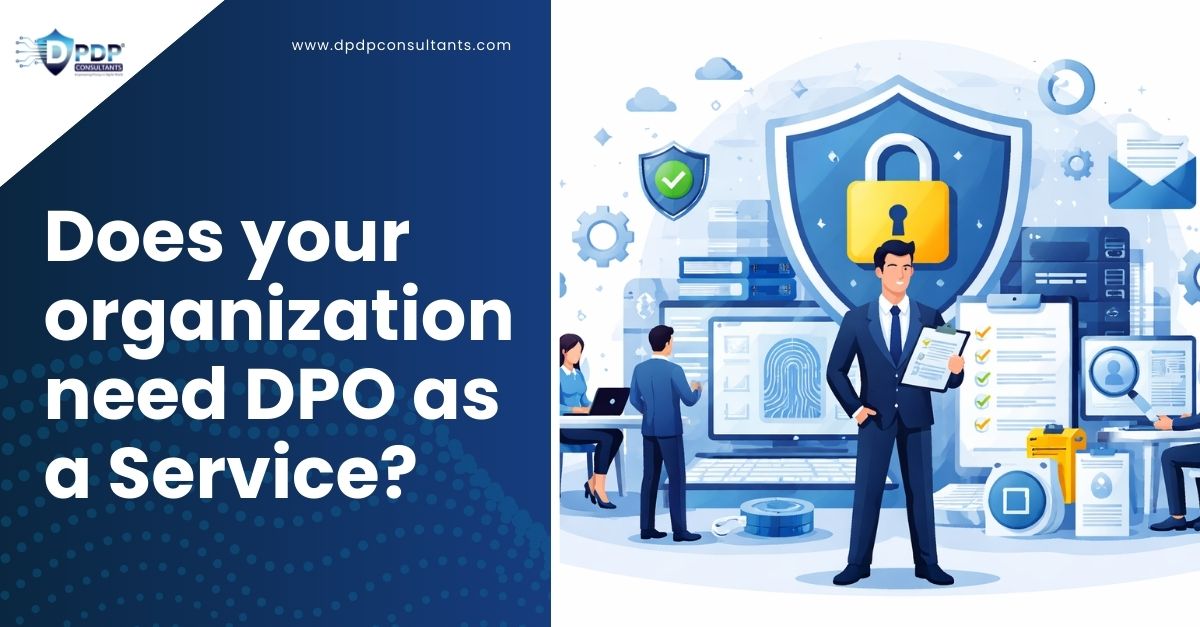
At the heart of this regulatory storm sits the Data
Protection Officer (DPO). For many businesses, from agile startups to
multinational conglomerates, the dilemma is no longer whether they need privacy
oversight, but how to implement it effectively. This leads to a pivotal
strategic choice: Should you hire a full-time internal executive, or opt for
DPO as a Service (DPOaaS)?
This comprehensive guide explores the nuances of the DPO
role, the legal triggers for appointment, and why the "as-a-service"
model is becoming the gold standard for modern data governance.
1.Defining the Modern Data Protection Officer (DPO)
A DPO is not merely a compliance officer or a legal
consultant; they are a high-level strategic architect of trust. Their primary
mandate is to ensure that an organization handles personal data in a way that
respects the rights of the individual while satisfying the letter of the law.
The
Multi-Faceted Role of a DPO
The DPO serves as a "triple agent," balancing the
interests of three distinct groups:
The Organization: Providing the roadmap for legal
data usage and risk mitigation.
The Data Principals (Individuals): Acting as the
guardian of their rights, such as the right to correction, erasure, or
grievance redressal.
The Regulators: Serving as the official point of
contact for the Data Protection Board of India or other global supervisory
authorities.
Core
Responsibilities in Detail
Compliance Monitoring: This involves regular audits
of data processing activities to ensure they haven't "drifted" from
their original legal purpose.
Advisory on Privacy Risk Management: Before a company
launches a new app or marketing campaign, the DPO assesses how it impacts user
privacy.
Data Protection Impact Assessments (DPIAs): A formal
process to identify and minimize the data protection risks of a project.
Employee Training: Creating a "culture of
privacy" so that a junior developer or a customer service agent
understands the importance of data confidentiality.
Breach Management: In the event of a leak, the DPO
manages the critical 72-hour window where authorities must be notified, and
damage control initiated.
2. Who is Legally Mandated to Appoint a DPO?
Not every business needs a DPO, but for any business
operating at scale, the law is increasingly clear. Under India's DPDP Act and
global frameworks, certain triggers make a DPO mandatory.
Significant
Data Fiduciaries (SDFs)
The Indian government can designate certain entities as
"Significant Data Fiduciaries." The criteria for this designation
include:
Volume of Data: Processing the personal data of
millions of users.
Sensitivity: Handling data that could cause
significant harm if leaked (biometrics, financial records, health data).
New Technologies: Extensive use of AI, machine
learning, or large-scale profiling.
Industry-Specific
Requirements
Even if not labelled an SDF, certain industries are
"high-risk" by nature:
Healthcare & Fintech: These sectors handle the
most intimate details of human life. A DPO is essential to navigate the overlap
between sector-specific laws (like RBI guidelines or health records acts) and
the DPDP Act.
EdTech: Processing children’s data is a high-stakes
activity. The DPDP Act places strict limitations on tracking and behavioural
monitoring of minors, making a DPO’s oversight vital.
SaaS & Cloud Providers: As "Data
Processors," these companies must prove to their clients (the Data
Fiduciaries) that they are compliant. A DPO often becomes a sales enabler by
providing the necessary assurance to close enterprise deals.
3. The Challenges of the Internal DPO Model
While having an "office down the hall" sounds
ideal, the reality of hiring an internal DPO is fraught with challenges in
today's talent market.
The
Talent Gap
There is a global shortage of qualified privacy
professionals. A good DPO must be a hybrid: part lawyer, part IT security
expert, and part operational manager. Finding one person who embodies all these
traits is rare and expensive.
Conflict
of Interest
The law requires a DPO to act independently. If a DPO also
serves as the Head of Marketing or the CTO, they may face a conflict of
interest, balancing the desire to "monetize data" against the legal
requirement to "protect data." This conflict can lead to regulatory
fines if the DPO's independence is compromised.
High
Fixed Costs
A qualified DPO commands a C-suite salary. Beyond the base
pay, the organization must invest in their continuous education, as privacy
laws change almost monthly. For many mid-sized firms, this is a heavy financial
burden that doesn't scale.
4. What is DPO as a Service (DPOaaS)?
DPO as a Service is a flexible, outsourced model
where an organization hires an external firm to fulfil the legal requirements
of the DPO role. Instead of one person, you get a team of experts who
provide continuous monitoring, advisory, and support.
How the
Model Works
On-Boarding: The service provider conducts a
"gap analysis" to see where your current privacy posture stands.
Integration: They integrate with your Slack, Teams,
or Jira to review product updates and data flows in real-time.
Representation: Their name goes on your privacy
policy as the official DPO, and they handle all correspondence with regulators.
5. The Transformational Benefits of DPO as a Service
A. Access
to a Multidisciplinary Brain Trust
When you hire an internal DPO, you get one perspective. When
you opt for DPOaaS, you gain access to a team. This team typically includes:
Legal Experts to interpret the shifting nuances of
the DPDP Act.
Cybersecurity Specialists to vet your encryption and
access controls.
Operational Auditors to ensure your physical and
digital workflows are secure.
B. Cost
Efficiency and Scalability
DPOaaS transforms a high fixed cost into a manageable
operational expense (OpEx). You can scale the service up during a merger or a
new product launch and scale it down during "business as usual"
periods. This is particularly beneficial for startups that need world-class
compliance on a bootstrap budget.
C. Speed
of Implementation
Building an internal privacy framework from scratch can take
a year. A DPOaaS provider brings "battle-tested" templates,
frameworks, and automated tools that can bring an organization to a state of
readiness in a matter of weeks.
D.
Objective, Conflict-Free Guidance
External DPOs have no "skin in the game" regarding
your internal politics. Their only goal is compliance. This independence is
highly valued by regulators and provides a "safety valve" for the
Board of Directors, ensuring they receive unbiased reports on the company’s
risk level.
6. Deep Dive: Key Functions Covered Under DPOaaS
To understand why this model is more than just a
"consultancy," look at the granular tasks it covers:
1. Data
Mapping and Inventory
You cannot protect what you don't know you have. DPOaaS
providers use automated tools to map where data enters your system, where it is
stored (India or overseas), and who has access to it.
2.
Privacy by Design (PbD) Advisory
This is a core requirement of the DPDP Act. It means
thinking about privacy at the architectural level. The DPOaaS team works
with your software engineers to ensure that:
Data is minimized (only collect what is needed).
Retention periods are automated (data is deleted when no
longer needed).
Consent is granular (users can opt-in to specific uses).
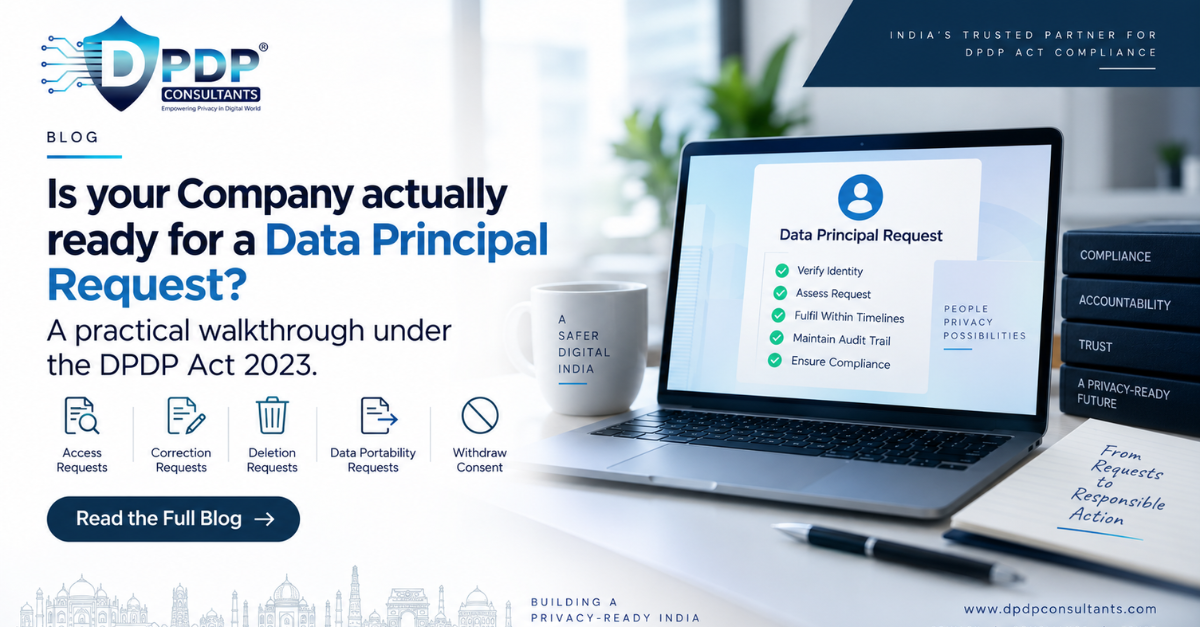
3. Data
Subject Request (DSR) Management
Under new laws, individuals have the right to ask,
"What data do you have on me?" and "Delete my data."
Managing these requests manually is a nightmare. DPOaaS providers implement
systems to verify identities and fulfill these requests within the legal
timelines.
4. Vendor
Risk Management (TPRM)
Your compliance is only as strong as your weakest vendor. If
your cloud storage provider or CRM tool has a leak, you are often
legally liable. DPOaaS includes "Third-Party Risk Management," where
the provider audits your vendors' security certificates and ensures your
contracts have the necessary "data protection clauses."
7. Comparative Analysis: Internal vs. Outsourced
|
Parameter
|
Internal
DPO
|
DPO as a
Service
|
|
Availability
|
One person
(Sick leave/Vacation issues)
|
Team-based
(Always available)
|
|
Independence
|
Can be
influenced by internal KPIs
|
Inherently
independent and objective
|
|
Tech Stack
|
Company must
buy/build privacy tools
|
Provider
often brings their own tech
|
|
Regulatory
Standing
|
High, if the
individual is qualified
|
High,
especially with reputable firms
|
|
Knowledge
Base
|
Limited to
one industry/background
|
Cross-industry
experience and global reach
|
8. The Strategic Value Beyond Compliance
Opting for DPO as a Service is not just about avoiding
fines; it is a strategic business move.
Building
"Privacy Trust"
In a world of constant data breaches, customers are choosing
brands they can trust. Displaying a certified DPO service on your platform acts
as a "trust seal." It tells your customers, "We take your data
seriously enough to hire global experts to guard it."
Facilitating
Global Expansion
If an Indian SaaS company wants to expand to Germany or
California, they must comply with GDPR or CCPA. A DPOaaS provider with global
expertise can bridge that gap instantly, ensuring the product architecture is
compliant with all jurisdictions simultaneously.
Investor
Confidence
During Due Diligence for a Series B or C funding round,
investors look closely at data liabilities. An organization with a robust
DPOaaS framework is a much lower risk, often leading to better valuations and
faster deal closures.
9. Choosing the Right DPO Service Provider
Not all DPO services are created equal. When selecting a
partner, look for:
Pedigree: Do they have a track record in both legal
and technical domains?
Responsiveness: Will you have a dedicated account
lead, or are you just a ticket in a queue?
Localized Knowledge: Do they truly understand the
Indian DPDP Act's specific nuances, such as the role of "Consent
Managers"?
Tech-Forward Approach: Do they use automation, or are
they relying on outdated spreadsheets?
10. Conclusion: The Future is Privacy-First
The era of "moving fast and breaking things" is
over when it comes to personal data. The regulatory landscape of 2026 demands
accountability. While the internal DPO remains a viable option for massive
enterprises with unlimited budgets, DPO as a Service has emerged as the
most efficient, scalable, and expert-driven solution for the majority of the
business world.
By opting for DPOaaS, you aren't just checking a box for the
regulators. You are building a resilient, future-ready organization that treats
data with the respect it deserves, turning compliance from a burden into a
competitive powerhouse.
Take the
Next Step
Is your organization ready for the next wave of
DPDP Act enforcement?
Contact us for a free consultation at info@dpdpconsulants.com or
visit our website DPDP
Consultants